



Consider This: What if HOW you think matters more than WHAT you think?
At first glance, the opening question can feel backward. After all, Western Christians have been trained to prioritize what we think: right doctrine, correct beliefs and accurate interpretations. We assume that if we can get the content of our thinking right, everything else will follow.
But what if the deeper issue isn’t the content of our thoughts, but the process that produces them?
Think About It
We don’t usually think about how we think. We just think.
Thoughts appear, conclusions form, decisions follow—and we move on. It feels natural; automatic and reliable.
But underneath that sense of normalcy is a hidden reality: Your thinking isn’t neutral—it’s patterned. And those patterns are being shaped continuously (usually without our awareness). As we saw in my last article, our paradigms not only impact our thoughts, they can actually determine them.
Here’s a link to the article if you want a refresh:

This is why Jesus began his ministry preaching the need for repentance—metanoia, literally “change the mind” (Mat. 4.17). And it’s why the renewing of our minds produces transformation (Rom. 12.1-2).
But what exactly is changing when we ‘change our mind’? To answer that, we need to check under the hood of our thinking.
By the way, for more insight into both the need and the opportunity for mind change facing the church, I recommend Alan Hirsch and Rob Kelly’s book:

Mind + Brain
To begin, we need to make a basic distinction: Your mind and your brain are not the same thing.
Your mind is the part of your spirit and/or soul that thinks, believes, chooses, and feels. It’s tied to your identity, your will and your ability to direct your affections.
In contrast, your brain is the physical organ that processes those thoughts. It stores patterns. It builds pathways. It reinforces what is repeated. Every thought you think leaves a trace. Every repeated thought strengthens that trace. Over time, your brain becomes wired to think in certain ways—not because those ways are true, but because they are familiar.
That distinction changes everything, because it means that your mind may not always be functionally in charge.
Even though it feels like it is.
Car and Driver
Think of it like this: Your brain is like a car, and your mind is like a driver.
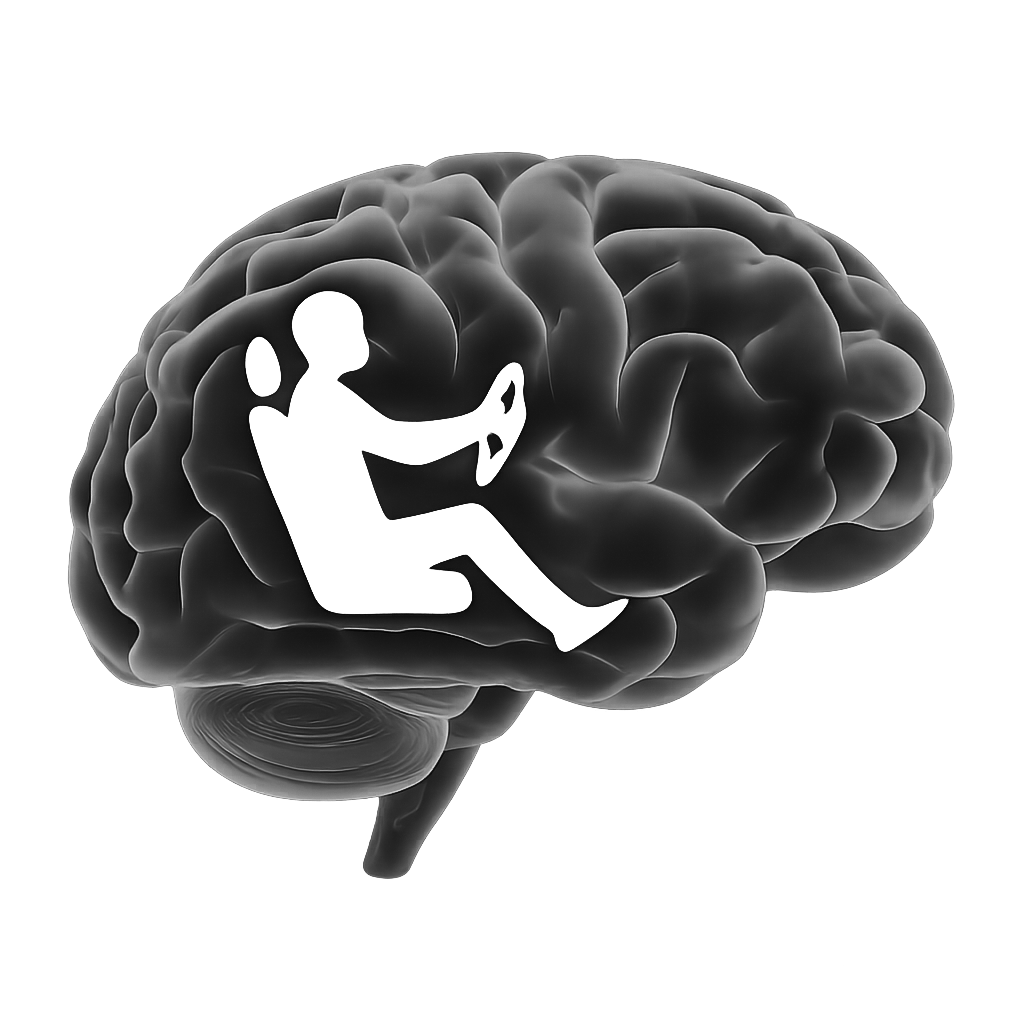
The brain responds to input—the same way a car responds to the driver’s input by accelerating, turning and braking. But the car isn’t designed to choose the destination, it’s designed to help the driver get to the destination.
At least, that’s how it’s supposed to work.
But something subtle can happen: If the mind becomes passive, distracted or unaware, it lets the brain drive autonomously. Not because it has intention—but because it has opportunity.
And if the brain has been allowed to operate this way for an extended period of time, the repetition and reinforcement make its thoughts feel directive. And the more the mind becomes a passenger, the more it feels like we’re doing the thinking—when in reality, our brains are.
Increasingly, this is where most of us live. We assume we’re driving, but we’re mostly along for the ride. 1
So where does this leave us? Well, there’s good news, bad news and really bad news.
The Good News
Here’s the opportunity that we rarely realize: Your brain is changeable. It responds to your mind’s direction. When you intentionally choose a new thought—and then return to it, reflect on it, act on it—your brain begins to reorganize around it. New pathways form, and old ones weaken. What initially felt unnatural becomes familiar.
This is a biological process known as neuroplasticity, where your brain creates and begins utilizing new synaptic connections at scale. Unfortunately, it isn’t instantaneous. It takes time, attention and repetition to become established and substantial enough to override the pathways supporting the old thinking process. After all, those neural networks—many of which have been used and reinforced for decades—are vast and immeasurably interconnected. 2
But the principle holds: Your mind drives your brain—one thought at a time. That’s ultimately what makes repentance and renewal possible. Not as a momentary event—but as a patterned response of obedience.
The Bad News
But there’s also a problem: If your mind isn’t actively directing your thinking, your brain will seize its autonomous opportunity. And many of those autonomous thought patterns weren’t formed in a neutral environment. They were shaped by experiences—many of which are painful, confusing, or incomplete.
This means your brain often presents thoughts that feel legitimate and true … but aren’t. And because those thoughts seem automatic, we rarely question them. In fact, we assume they are true and accurate, and so we swallow them hook, line and sinker.
The Really Bad News
Over time, these repeated, unmanaged thought patterns become deeply embedded physically. Connections become faster, more efficient and more automatic. Neuroplasticity strengthens what’s used most. So even false or negative beliefs, fears and distorted assumptions can feel neurologically “normal.”
Eventually, thoughts don’t feel like options anymore—they feel like reality. We trust them, using them to create the paradigms that then shape what we think about God, ourselves and our reality.
It’s here that repentance (“mind change”) becomes difficult—not because it’s unavailable, but because it’s unfamiliar. To change your thinking at this point doesn’t just require new information, it requires interrupting what feels natural.
And that’s uncomfortable.
The Bottom Line
Ultimately, if our minds don’t drive our brains, our brains simply won’t change. They’ll lock into false patterns of thinking that don’t align with either God’s identity or our own. And the more it progresses, the deeper down the rabbit hole of false thinking we’ll go.
Internally, we’ll experience reality tangentially. Life will seem ... off—with no clear explanation or solution. We’ll feel hindered from receiving new spiritual insights. Joy and peace will be elusive.
Behaviorally, we’ll be driven to unhealthy habits, self-focused consumption and greed. It may drive us to rigid religiosity or hyper-intellectualism. Or it may drive us to the mental cul-de-sac of ambivalence, where nothing matters (or so we tell ourselves).
We won’t have the mind of Christ.
So how can we take control of our brains?
What to Do
You can’t change thoughts you don’t know are false and that you’re not aware of. So the first step is mind-blowingly simple—but absolutely essential: You must believe.
Believe that God designed your spiritual mind to drive your physical brain. Believe that your thoughts need renewal, and that God is motivated to produce this.
The second step is equally basic and necessary: You must prepare.
Prepare yourself—from an identity and posture of dependence—to be open and receptive to the changes God desires to reveal. And embrace the reality that you need more renewal than you think you do.
For me, I capture these two steps in a simple prayer:
“Lord, I want to be like Jesus. I believe this is your desire for me. Please show me anything in me that doesn’t look like him.”
The third step is practicing the discipline of reflection, which will disrupt your brain’s default patterns to allow space for your mind to begin driving your thinking.
Here’s what it looks like in practice:
Start with a truth. This lays a thought foundation. Something like, “Jesus loves me” or “God is pleased with me” works great.
Notice your thoughts. Not just what you think, but how quickly you accept it as true or false. Expect some thoughts to be positive and others to be negative (e.g. accusatory or fearful). Watch for what gets exposed, like attitudes, assumptions and self-perceptions.
Interrupt the automatic. When a thought feels obvious or certain, pause. Get curious about where it came from. Don’t move to closure or action step (yet).
Return to truth relationally. Reflect again—not just as information, but as something to be experienced and integrated.
Repeat intentionally. New patterns don’t form from single thought. They form through repetition.
This won’t take long—often just 5 minutes is sufficient to disrupt your brain’s “normal” thinking patterns. If you journal, you may find it helpful to capture what comes out of the process and detect patterns in your thinking.
Also, don’t be surprised if at first this feels silly or unnecessary—perhaps uncomfortable; maybe even scary. Your brain doesn’t want to conform; it resists repentance and renewal because it’s extra work.
Reflection is a disciplined step of engagement that recognizes renewal as a process, and repentance as an action step in that process. Repentance is a change of mind—literally, a change in how your thoughts operate.
It steps out of automatic thought patterns enough to become aware of them. It re-evaluates what has historically felt certain. It engages thinking differently, allowing you to be dependent upon God in ways you weren’t aware of.
And then repeating that choice until it becomes your brain’s new pattern.
Back to the Question
So … what if HOW you think matters more than WHAT you think?
If how you think ultimately shapes what you think, repentance and renewal aren’t just about correcting wrong thoughts. They’re about transforming the process that produces them. They’re ongoing, practical, embodied opportunities to think differently. To live differently. To become who God made you to be.
That’s game-changing.
The question isn’t whether you’re thinking. You are.
The question is whether you’re aware of how you’re thinking—and whether you’re willing to purposefully change it.
Because if you’re not, something very dangerous can happen. And for the church in the West, it may already be happening.
It may have already happened.
To fully grasp the gravity of that possibility, there’s one more thing we need to understand about how our brains operate—specifically, how they process reality in two distinct but connected ways.
To be continued ...

What makes this particularly relevant for the Western church is that we have centuries of tradition and practice around the assumption that knowing sound theology, correct doctrine and participating in sound teaching are the primary avenues toward spiritual maturity. No one in their right mind, of course, would minimize the importance of sound theology, correct doctrine and quality teaching. But we have to awaken to the reality that these aren’t what actually shapes us spiritually. Rather, God spiritually forms us through our faith and our willingness to have our minds (and brains) renewed, so that we think like Jesus—and as a result, act like Jesus.
One recent study estimated that there were 1.5 billion synaptic connections in a one cubic millimeter sample of cerebral tissue—about the same size as a grain of sand. This makes the number of synapses in our brains practically impossible to calculate.
Best thing I’ve read on repentance. Thanks Damian!
Yes! Over the last three years, I have been working hard on developing new thought patterns. I had a really good Christian persona on the outside, but if you were to spend a day inside my brain, you’d probably be horrified. I set out to intentionally identify and change thoughts that didn't align with truth. It took discipline, persistence, and discernment. I did some deep dives into Scripture and read a few good books; but most importantly, I was learning what it actually looks like to take every thought captive (2 Corinthians 10:5). This is still a work in progress, but I feel like I am much further down the road than I was a few years back. Books I liked: Thinking, Fast and Slow by Daniel Kahneman and Winning the War in Your Mind by Craig Groeschel.