



Consider This:
The motivation to be independent
is leading you away from
experiencing the life you most long for.
You weigh your options, and make your decisions. You define your path. Your create your strategies and carry responsibility for what your life becomes.
That’s normal. It’s what you’ve been taught.
Especially in the West—and even more so in the U.S.—we’ve been shaped by a story that prizes independence, self-sufficiency and personal agency. We’re taught to stand on our own, figure things out and make something of ourselves.
There’s discipline in that. Initiative. Responsibility.
But there’s also something underneath it that we rarely stop to question. Because even when things are going well, there’s often a subtle tension running beneath the surface. A low-grade anxiety. A sense that something’s slightly off—even when we can’t quite explain why.
We carry more than we expected to carry. We feel responsible for more than we were designed to manage. We worry about failure. We’ve lived it so long it feels natural.
But what if it isn’t? What if independence isn’t just a cultural value—but a misalignment with how we were created? What if the tension we feel isn’t random?
What if it’s the result of trying to live independently … in a reality that was never designed for it?
We Were Never Meant to Be Self-Generating
The opening pages of Scripture present a reality that’s both simple and profound. God creates humanity in his image—the imago Dei—not as isolated individuals, but as a unified humanity that reflects him.
This isn’t just a statement about value or dignity. It’s a statement about function: Human beings were created to reflect God, not to generate their own identity.
But that’s not how we tend to think about ourselves.
We often assume identity is something we discover within—something we define, refine and project outward. Something we aspire to and build over time.
The biblical picture turns that assumption upside down.
We were designed to receive our identity, meaning, purpose and passion from outside ourselves—from God. Not with God’s help. Not partially. Not independently.
Completely dependent.
As Richard Lints puts it, our identity as image bearers is inherently dependent: An image has no identity apart from what it reflects. But he goes further, clarifying what that actually means for how we live:
“People, who are created as divine image bearers, are also capable of reflecting the created order. Thus humans may be said to have a reflective identity. In some sense they find meaning outside themselves by virtue of what they reflect.”1
That phrase—reflective identity—gets at the heart of it:
We don’t design ourselves, God does.
We don’t generate meaning; we reflect it.
We don’t originate purpose, we receive it.
We don’t define ourselves from within, we become who we are by who we’re connected to.
Which leads to something we don’t naturally want to accept: We don’t have the capacity to define ourselves independently.
We were never meant to.
Dependence Isn’t a Weakness—It’s Reality
If that feels unsettling, you’re not alone. Dependence sounds like vulnerability. Exposure. Risk. It feels like losing control.
In many ways, it is.
But it’s not a flaw in the system—it is the system.
Jesus makes this explicit in one of his simplest and most familiar illustrations:
“I am the vine; you are the branches … apart from me you can do nothing.”
(John 15.5)
We tend to hear this in terms of Western interpretative themes. Like productivity, for example: as if Jesus is saying “You won’t be very effective without me.” Another is intimacy, as if we’ll experience higher levels of connection with him by emotionally drawing near to Jesus.
Both of these interpretations miss the boat, however. They end up sustaining a false perspective that Jesus is some kind of superpower, or on-call genie; a lifeline when we need him most.
Jesus is actually saying something far more fundamental: A branch doesn’t just struggle to produce fruit on its own—it has no life in itself at all. It doesn’t even qualify as a branch when it’s disconnected.
Picture the contrast. A branch filled with grapes—alive, full, fruitful—isn’t impressive because of what it produces on its own. It’s impressive because of what it’s connected to. The life of the vine is flowing through it, producing something the branch could never generate by itself.
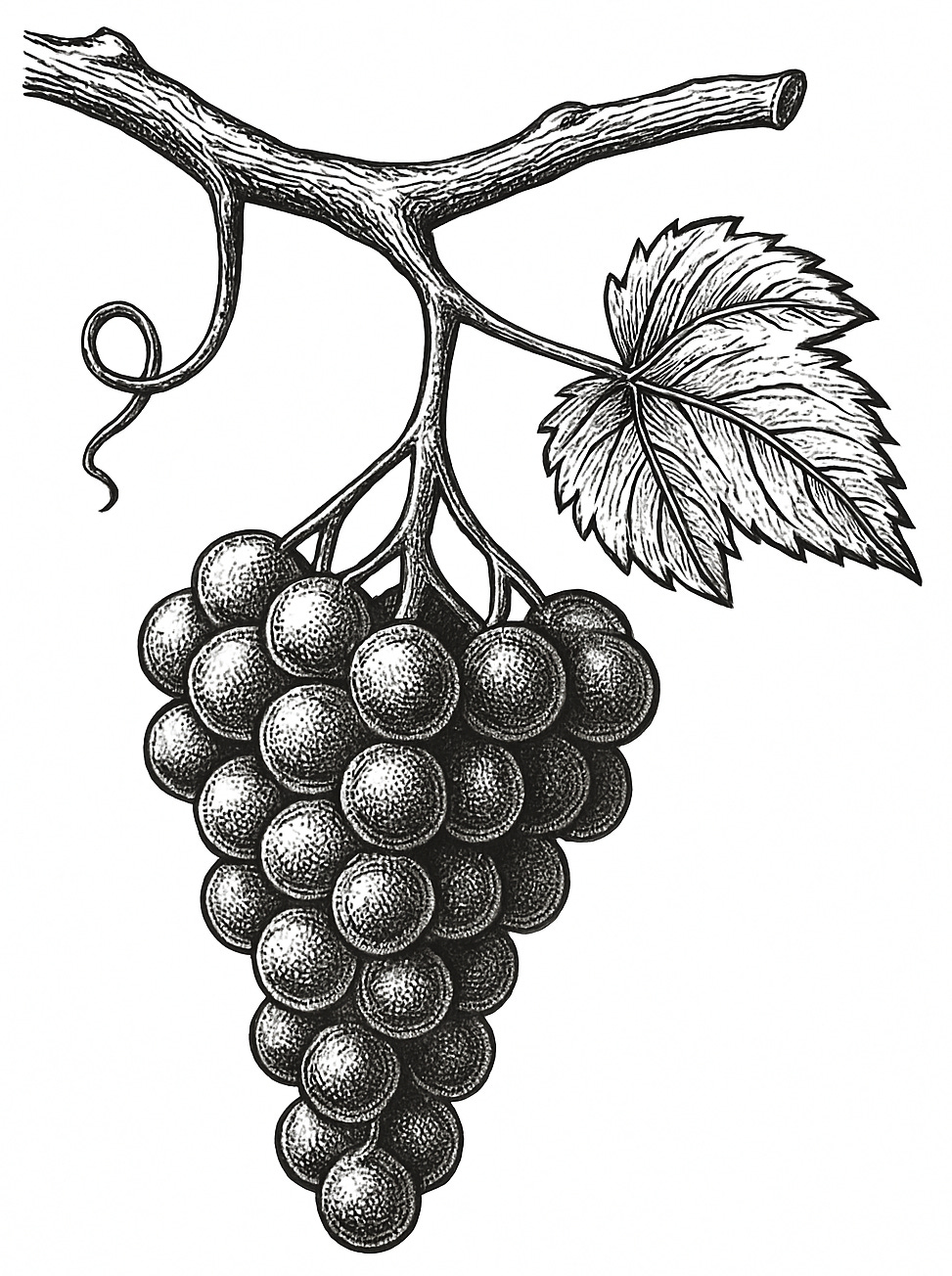
Now picture a branch cut off from that vine. It may still look like a branch, but it’s already lost its identity. No matter how much effort it exerts, it can’t produce fruit. Not because it’s trying poorly—but because it’s no longer connected to the source of life.

That’s not just an agricultural metaphor. It’s an identity statement. We don’t occasionally depend on God. We are dependent, as an existential reality.
The only question is whether we recognize it—or try to live as if it’s not true.
The Kind of Life We Can Barely Imagine
Before anything went wrong—before sin, shame and fear—humanity lived in this state of dependence. And they weren’t even aware of it.
Adam and Eve weren’t trying to depend on God. They weren’t striving for it or working to maintain it. It was simply reality. They lived in complete trust, with no competing allegiances and no internal conflict.
They were both fully known and fully exposed—“naked and without shame.” There was no fear of loss, no instinct for self-protection; no anxiety about the future. They had no need to generate their own identity or meaning, because everything they needed was already being received.
They lacked nothing.
Perhaps most striking of all, they had no awareness that independence was even an option. That’s how complete their dependence was.
Why This Feels So Foreign to Us
That kind of life feels almost impossible for us to imagine—not because it’s unrealistic, but because it’s unfamiliar.
We live in a world where independence is assumed. We plan our lives, manage our outcomes, hedge against risk and protect ourselves—physically, emotionally, relationally, financially. Even (or particularly) spiritually.
Underneath the ebbs and flows of life, we retain control of our identity. We see ourselves as fundamentally self-directed people who include God, rather than dependent beings whose first belief is that we receive everything from him.
This is where the distinction becomes more than theoretical. Do we see ourselves as independent beings who occasionally depend on God? Or as dependent beings who have no identity apart from him?
This isn’t nuance. It’s the difference between managing a relationship with God and being defined by it.
The Weight of That Choice
This is where the tension shows up.
Because if we’re honest, most of us don’t want to be dependent. We might say we do, or believe we should be. But the idea of receiving our identity, meaning, purpose and passion only from God can be threatening.
What happens to our control? Our plans? What happens to the version of ourselves we’ve worked so hard to build?
These aren’t abstract concerns. They expose something deeper: We don’t just struggle to practice dependence—we struggle to desire it.
And that resistance matters. Because if dependence is who we were created to be, then our hesitation reveals how deeply we’ve come to identify ourselves as independent.
Why This Matters More Than We Think
At the same time, there’s something in us that resists dismissing this entirely.
We feel it in moments we don’t fully understand—when life slows down just enough for us to notice that something’s missing. It’s that subtle, persistent sense that we’re carrying more than we were meant to carry; that we’re responsible for more than we were designed to manage.
We’ve learned to live with it, so it feels normal. But what if that tension is the result of trying to function independently in a reality that was designed for dependence?
That possibility shifts how we approach everything. Because it means the issue isn’t primarily what we’re doing—it’s how we’re existing. So the invitation in front of us isn’t to become more disciplined or even more “spiritual.” It’s to reconsider something far more foundational: what it means to be human.
This invitation is about shifting away from seeing ourselves as independent individuals, who generate our identity and meaning from within and then incorporate God into our lives. It’s about seeing ourselves as dependent beings that reflect what we’ve received and live together as extensions of him in our world.
That’s not an easy shift to explore. It presses against instincts we’ve relied on for most of our lives. It challenges assumptions that feel obvious—even necessary. But if dependence is who we were created to be, then this isn’t optional. It’s reality—whether we embrace it or not.
And that raises a simple but weighty question: Are we willing to explore what it means to live like it’s true?
A Simple Practice: Relearning Dependence
Before moving on, it’s worth slowing down enough to engage this personally—not as a concept, but as a reality.
Set aside 5–10 minutes with no agenda and no checklist. Sit quietly and ask:
“God, what does it mean that I was created to receive all of my identity, meaning, purpose and passion from you?”
Pay attention to what surfaces—not just your thoughts, but your reactions.
Where do you feel resistance?
Where do you feel curiosity?
Where do you feel discomfort?
Don’t rush to resolve it. Just notice it.
Then ask:
“What part of me still wants to define myself on my own?”
Let whatever comes to mind surface without forcing or controlling it—and certainly without judging it.
Then move to the next question:
“What would it look like for me to depend on you—not occasionally, but completely?”
You may not have clear answers, and that’s okay. This isn’t about solving something. It’s about becoming aware of something that’s already true.
Finally, ask:
“How can I pass this on to others, and make disciples that receive their identity, meaning, purpose and passion from Jesus?”
This is the ultimate outcome of being dependent: being able to reproduce this same identity in others, for the sake of the gospel and the kingdom.
Final Thoughts
We don’t become dependent.
We are dependent.
The question is whether we’re willing to see it—and explore what that means. Because if this is who we were made to be, then everything about how we live may need to change.
Peace be with you …

Footnotes
Richard Lints, Identity and Idolatry: The Image of God and Its Inversion (United States: InterVarsity Press, 2015), pg. 29.