



Consider This:
How do you practice a way of thinking
you’ve spent a lifetime learning to ignore?
In my last three articles on How God Designed Us to Think, I explained how God’s design for our mind and brain lets us relate with him in the same way he’s relating with us.
The last article (Part 3) rolls up all theses features into what I call a thought Flow:
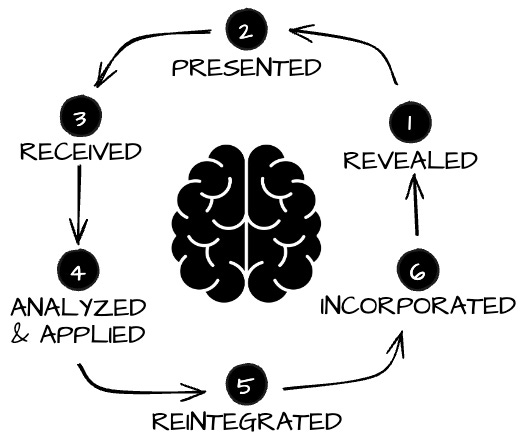
Using this Flow allows us to interact with truth and develop understanding at levels far deeper than just acquiring more information.
Here’s the article describing the Flow …

Setting the Context for the Flow
It’s important for Western followers of Jesus to understand that this Flow is experiential—phenomenological.1 By that, I mean
we begin consciously experiencing
something that has been
happening all along.
We become aware of intuitive processing in ways we haven’t previously noticed. Because we’re so accustomed to rational thinking, intuitive thinking can feel like new and unfamiliar territory.
To help navigate what might feel off the edge of your map, I wanted to provide some practical applications and examples—signposts to watch for and respond to as you begin to think with the mind of Christ.
Note: This is a paid-subscriber follow-up
to a previous article.
Subscribe if you want to have access to
this article (and future articles like it).
